Domain tennis-cup.de kaufen?
Wir ziehen mit dem Projekt
tennis-cup.de um.
Sind Sie am Kauf der Domain
tennis-cup.de interessiert?
domain@kv-gmbh.de · 0541-91531010
Domain tennis-cup.de kaufen?
Haben Prokaryoten Genome?
Haben Prokaryoten Genome? Ja, Prokaryoten haben Genome. Prokaryoten sind Lebewesen, die keine Zellkerne besitzen, aber sie haben dennoch genetisches Material in Form von DNA, das ihr gesamtes Erbgut enthält. Dieses Genom ist in der Regel in einem einzigen ringförmigen Chromosom organisiert, das sich im Zytoplasma der Zelle befindet. Prokaryoten können auch zusätzliche genetische Informationen in Form von Plasmiden tragen, die unabhängig vom Hauptchromosom repliziert werden können. Insgesamt haben Prokaryoten also definitiv Genome, die ihre genetische Information enthalten. **
Sind Erythrozyten Prokaryoten?
Sind Erythrozyten Prokaryoten? Nein, Erythrozyten sind keine Prokaryoten, sondern eukaryotische Zellen. Prokaryoten sind Zellen ohne Zellkern, während Erythrozyten einen Zellkern haben. Erythrozyten sind die roten Blutkörperchen, die für den Sauerstofftransport im Körper verantwortlich sind. Prokaryoten sind hingegen Bakterien und Archaeen, die sich durch ihr Fehlen eines Zellkerns auszeichnen. **
Ähnliche Suchbegriffe für Prokaryoten
Top-Angebote
Produkte zum Begriff Prokaryoten:
-
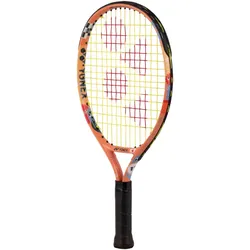
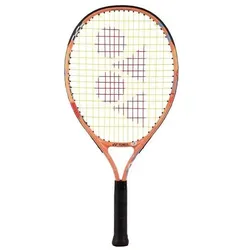
YONEX Kinder Tennis Schläger 25 YONEX JR 21, Tennis racket, Größe 0000 in OrangeDer YONEX 25 JR 21 ist ein bespannter Tennisschläger für Kinder. Du bekommst ihn direkt mit Bespannung. Der Kopf ist oval geformt, die Saiten sind gelb mit roten Akzenten. Zur Wahl stehen die Farben Ocean Blue und Coral Orange.36,90 €*Versand: 3,95 €Sichere Weiterleitung zum Anbieter
-
Pachelli, Nick: The Tennis CourtThe Tennis Court , Every one of the world's half a million tennis courts is, at its most basic, an identical blank canvas: a 78-foot by 36-foot rectangle, divided by a 3-foot-high net in its centre, and marked with eleven straight lines. But add in the elements of surface, space, wind, acoustics, crowds, shadows, humidity, and even air density, and every tennis court is unique-a work of art. And some are masterpieces. Nick Pachelli curates and profiles 200 of the world's most beautiful, iconic, significant, alluring, and idiosyncratic tennis courts from across the globe, each breathtakingly photographed. He explores the heavyweights, including Wimbledon's All England Lawn Tennis Club, which employs a hawk to keep stray birds from soiling the meticulous lawns. Arthur Ashe, the Grandstand, and Court 17 in Flushing, Queens, where hundreds of thousands of tennis fans gather every summer for the US Open. And there's Court Philippe-Chatrier at Roland-Garros, whose clay seems to take on a different shade-burnt orange, burnt red, burgundy, umber-every time you see it. We visit far-flung treasures, such as Waiheke Tennis Club in New Zealand, where you'll need to take a plane, then a ferry, then a car or bus, and then walk before arriving there. Indoor marvels, including the Tennis Club de Belgique, which evokes the hushed, reverent feeling of a theatre, with skylights illuminating the court and leaving the spectators in the shadows. Hidden jewels, such as the tiny Tennis Club San Stin in Venice, a secret, single outdoor clay court tucked away behind a villa and a 15-foot wall shrouded with vines. There are urban courts, including the Knickerbocker Field Club, deep in the heart of Flatbush, Brooklyn. Academies, like Rafael Nadal's tennis temple in Mallorca, Spain. And the extreme: a single court completely isolated in the wilds of Scotland; a court in northern Spain revealed when the tide goes out, the sand hardens, and the metallic plates that serve as lines re-emerge; and a court in Kenya made out of termite mounds. Throughout, Pachelli not only conducts a masterful, once-in-a-lifetime tour of the world's best courts, but in his writing does something equally immersive: He captures the real passion-some might say obsession-that tennis inspires. Because it's on the court, no matter how grandiose or mundane, whether in an exotic locale or around the corner, where tennis players truly see themselves. Where we come face-to-face with our temperament, our drive, our frustration, our bliss, our longing. "This book made me fall in love with tennis all over again." - Rennae Stubbs, former world No. 1 and six-time Grand Slam champion "How had I been so blind? I'd seen a tennis court as an arrangement of lines, neat boxes, a net. This book reveals so much more: spaces within spaces, quirks and surfaces, shadows and light, and the communities most of all. What a gift. I won't look at the game the same way again." - Louisa Thomas, staff writer, The New Yorker "A pure pleasure to read and peruse." - Christopher Clarey, New York Times bestselling author "From Kent to Kenya, Marrakech to Melbourne. Indoors, outdoors. Seaside and underground. Pachelli captures the magic in this masterful book, which celebrates not just tennis, but this topspinning orb we call planet Earth." - Jon Wertheim, New York Times bestselling author and correspondent for 60 Minutes "I've been around tennis all over the world, and this book truly speaks to the beauty and importance of tennis courts, whether at tennis academies or remote public courts. Every tennis player and fan will enjoy this book." - Patrick Mouratoglou, world-renowned tennis coach and founder of Mouratoglou Academy "This book contains hundreds of beautifully photographed tennis courts. The real joy, though, is found in the stories that unfold about each one." - Katrina M. Adams, author and former president of the USTA "Detailing the remote and far-removed to the legendary courts that have hosted the most storied events in tennis history, this gorgeous book lends us a lens to encounter the world." - Caitlin Thompson, founder of Racquet magazine "Can't travel right now? No worries; Nick Pachelli has got you covered. My recommendation: Open the book to a random page and start dreaming away. And who knows? One day you may find yourself exactly there. A truly dreamy book!" - Andrea Petkovic, former top-10 professional tennis player, host, and writer "A stunning celebration of tennis that speaks to the heart of anyone with a passion for a pastime."- Tom Coyne, New York Times bestselling author , > , Erscheinungsjahr: 20240827, Produktform: Leinen, Autoren: Pachelli, Nick, Seitenzahl/Blattzahl: 335, Themenüberschrift: SPORTS & RECREATION / Racket Sports / Tennis, Keyword: tennis court book;us open;gifts for men;coffee table book;tennis photography;french open;grand slams;tennis fashion;tennis style;travel photography;tennis europe, Fachschema: Englische Bücher / Sachbuch / Sport~Fotobände (allgemein)~Geschenkband / Fotobände~Fotografie / Dokumentarfotografie, Geschichte~Tennis~Sport / Lexikon, Handbuch, Jahrbuch, Fachkategorie: Fotografie: Sammlungen~Fotojournalismus~Sport, allgemein~Reiseführer: Aktiv-Urlaub, Imprint-Titels: Artisan, Warengruppe: HC/Ballsport, Fachkategorie: Tennis, UNSPSC: 49019900, Warenverzeichnis für die Außenhandelsstatistik: 49019900, Verlag: Workman Publishing, Verlag: Workman Publishing, verfügbar ab: 20240912, Länge: 290, Breite: 211, Höhe: 30, Gewicht: 1485, Produktform: Gebunden, Genre: Importe, Genre: Importe,31,12 €*Versand: 0,00 €Sichere Weiterleitung zum Anbieter



-
Sind Amöben Prokaryoten?
Sind Amöben Prokaryoten? Nein, Amöben sind keine Prokaryoten. Sie gehören zu den Eukaryoten, da sie Zellen mit einem Zellkern und anderen membrangebundenen Organellen haben. Prokaryoten hingegen, wie Bakterien, haben keinen echten Zellkern und ihre DNA schwimmt frei im Zellinneren. Amöben sind einzellige Lebewesen, die sich durch Pseudopodien fortbewegen und sich von anderen Organismen ernähren. Sie sind in der Regel in feuchten Umgebungen zu finden und spielen eine wichtige Rolle im Ökosystem als Destruenten. **
-
Sind Mitochondrien Prokaryoten?
Sind Mitochondrien Prokaryoten? Nein, Mitochondrien sind keine Prokaryoten, sondern Organellen in eukaryotischen Zellen. Sie haben eine eigene DNA, die sich von der des Zellkerns unterscheidet, und können sich unabhängig vermehren. Prokaryoten hingegen sind einzellige Lebewesen ohne Zellkern, wie Bakterien. Mitochondrien haben eine ähnliche Größe und Struktur wie bestimmte Bakterien, was auf eine evolutionäre Beziehung zwischen den beiden hinweist, aber sie sind dennoch Teil eukaryotischer Zellen. **
-
Sind Amöben Prokaryoten?
Nein, Amöben sind Eukaryoten. Sie haben einen Zellkern und andere membranbegrenzte Organellen, im Gegensatz zu Prokaryoten wie Bakterien, die keinen Zellkern haben. Amöben sind einzellige Organismen, die zur Gruppe der Protozoen gehören. **
-
Sind Prokaryoten Menschenzellen?
Nein, Prokaryoten sind keine Menschenzellen. Prokaryoten sind eine Gruppe von einzelligen Organismen, die keine Zellkerne oder komplexe Organellen haben. Menschenzellen hingegen sind Eukaryoten, die einen Zellkern und verschiedene Organellen besitzen. **


Sind Algen Prokaryoten?
Nein, Algen sind keine Prokaryoten. Algen sind eukaryotische Organismen, was bedeutet, dass sie Zellkerne und Membran-gebundene Organellen haben. Prokaryoten hingegen sind einzellige Organismen ohne Zellkern oder Membran-gebundene Organellen. **
Hat der Mensch Prokaryoten?
Hat der Mensch Prokaryoten? Prokaryoten sind einzellige Lebewesen ohne Zellkern, wie Bakterien. Der menschliche Körper beherbergt tatsächlich eine Vielzahl von Prokaryoten, die in unserem Verdauungstrakt leben und eine wichtige Rolle bei der Verdauung und Immunabwehr spielen. Diese Prokaryoten helfen bei der Zersetzung von Nahrungsmitteln und schützen den Körper vor schädlichen Bakterien. Insgesamt haben wir also eine symbiotische Beziehung mit Prokaryoten in unserem Körper. **
Top-Angebote
Produkte zum Begriff Prokaryoten:
-
YONEX Kinder Tennis Schläger 25 YONEX JR 21, Tennis racket, Größe 0000 in OrangeDer YONEX 25 JR 21 ist ein bespannter Tennisschläger für Kinder. Du bekommst ihn direkt mit Bespannung. Der Kopf ist oval geformt, die Saiten sind gelb mit roten Akzenten. Zur Wahl stehen die Farben Ocean Blue und Coral Orange.36,90 €*Versand: 3,95 €Sichere Weiterleitung zum Anbieter
-
Haben Prokaryoten Genome?
Haben Prokaryoten Genome? Ja, Prokaryoten haben Genome. Prokaryoten sind Lebewesen, die keine Zellkerne besitzen, aber sie haben dennoch genetisches Material in Form von DNA, das ihr gesamtes Erbgut enthält. Dieses Genom ist in der Regel in einem einzigen ringförmigen Chromosom organisiert, das sich im Zytoplasma der Zelle befindet. Prokaryoten können auch zusätzliche genetische Informationen in Form von Plasmiden tragen, die unabhängig vom Hauptchromosom repliziert werden können. Insgesamt haben Prokaryoten also definitiv Genome, die ihre genetische Information enthalten. **
-
Sind Erythrozyten Prokaryoten?
Sind Erythrozyten Prokaryoten? Nein, Erythrozyten sind keine Prokaryoten, sondern eukaryotische Zellen. Prokaryoten sind Zellen ohne Zellkern, während Erythrozyten einen Zellkern haben. Erythrozyten sind die roten Blutkörperchen, die für den Sauerstofftransport im Körper verantwortlich sind. Prokaryoten sind hingegen Bakterien und Archaeen, die sich durch ihr Fehlen eines Zellkerns auszeichnen. **
-
Sind Amöben Prokaryoten?
Sind Amöben Prokaryoten? Nein, Amöben sind keine Prokaryoten. Sie gehören zu den Eukaryoten, da sie Zellen mit einem Zellkern und anderen membrangebundenen Organellen haben. Prokaryoten hingegen, wie Bakterien, haben keinen echten Zellkern und ihre DNA schwimmt frei im Zellinneren. Amöben sind einzellige Lebewesen, die sich durch Pseudopodien fortbewegen und sich von anderen Organismen ernähren. Sie sind in der Regel in feuchten Umgebungen zu finden und spielen eine wichtige Rolle im Ökosystem als Destruenten. **
-
Sind Mitochondrien Prokaryoten?
Sind Mitochondrien Prokaryoten? Nein, Mitochondrien sind keine Prokaryoten, sondern Organellen in eukaryotischen Zellen. Sie haben eine eigene DNA, die sich von der des Zellkerns unterscheidet, und können sich unabhängig vermehren. Prokaryoten hingegen sind einzellige Lebewesen ohne Zellkern, wie Bakterien. Mitochondrien haben eine ähnliche Größe und Struktur wie bestimmte Bakterien, was auf eine evolutionäre Beziehung zwischen den beiden hinweist, aber sie sind dennoch Teil eukaryotischer Zellen. **
Ähnliche Suchbegriffe für Prokaryoten
-
Pachelli, Nick: The Tennis CourtThe Tennis Court , Every one of the world's half a million tennis courts is, at its most basic, an identical blank canvas: a 78-foot by 36-foot rectangle, divided by a 3-foot-high net in its centre, and marked with eleven straight lines. But add in the elements of surface, space, wind, acoustics, crowds, shadows, humidity, and even air density, and every tennis court is unique-a work of art. And some are masterpieces. Nick Pachelli curates and profiles 200 of the world's most beautiful, iconic, significant, alluring, and idiosyncratic tennis courts from across the globe, each breathtakingly photographed. He explores the heavyweights, including Wimbledon's All England Lawn Tennis Club, which employs a hawk to keep stray birds from soiling the meticulous lawns. Arthur Ashe, the Grandstand, and Court 17 in Flushing, Queens, where hundreds of thousands of tennis fans gather every summer for the US Open. And there's Court Philippe-Chatrier at Roland-Garros, whose clay seems to take on a different shade-burnt orange, burnt red, burgundy, umber-every time you see it. We visit far-flung treasures, such as Waiheke Tennis Club in New Zealand, where you'll need to take a plane, then a ferry, then a car or bus, and then walk before arriving there. Indoor marvels, including the Tennis Club de Belgique, which evokes the hushed, reverent feeling of a theatre, with skylights illuminating the court and leaving the spectators in the shadows. Hidden jewels, such as the tiny Tennis Club San Stin in Venice, a secret, single outdoor clay court tucked away behind a villa and a 15-foot wall shrouded with vines. There are urban courts, including the Knickerbocker Field Club, deep in the heart of Flatbush, Brooklyn. Academies, like Rafael Nadal's tennis temple in Mallorca, Spain. And the extreme: a single court completely isolated in the wilds of Scotland; a court in northern Spain revealed when the tide goes out, the sand hardens, and the metallic plates that serve as lines re-emerge; and a court in Kenya made out of termite mounds. Throughout, Pachelli not only conducts a masterful, once-in-a-lifetime tour of the world's best courts, but in his writing does something equally immersive: He captures the real passion-some might say obsession-that tennis inspires. Because it's on the court, no matter how grandiose or mundane, whether in an exotic locale or around the corner, where tennis players truly see themselves. Where we come face-to-face with our temperament, our drive, our frustration, our bliss, our longing. "This book made me fall in love with tennis all over again." - Rennae Stubbs, former world No. 1 and six-time Grand Slam champion "How had I been so blind? I'd seen a tennis court as an arrangement of lines, neat boxes, a net. This book reveals so much more: spaces within spaces, quirks and surfaces, shadows and light, and the communities most of all. What a gift. I won't look at the game the same way again." - Louisa Thomas, staff writer, The New Yorker "A pure pleasure to read and peruse." - Christopher Clarey, New York Times bestselling author "From Kent to Kenya, Marrakech to Melbourne. Indoors, outdoors. Seaside and underground. Pachelli captures the magic in this masterful book, which celebrates not just tennis, but this topspinning orb we call planet Earth." - Jon Wertheim, New York Times bestselling author and correspondent for 60 Minutes "I've been around tennis all over the world, and this book truly speaks to the beauty and importance of tennis courts, whether at tennis academies or remote public courts. Every tennis player and fan will enjoy this book." - Patrick Mouratoglou, world-renowned tennis coach and founder of Mouratoglou Academy "This book contains hundreds of beautifully photographed tennis courts. The real joy, though, is found in the stories that unfold about each one." - Katrina M. Adams, author and former president of the USTA "Detailing the remote and far-removed to the legendary courts that have hosted the most storied events in tennis history, this gorgeous book lends us a lens to encounter the world." - Caitlin Thompson, founder of Racquet magazine "Can't travel right now? No worries; Nick Pachelli has got you covered. My recommendation: Open the book to a random page and start dreaming away. And who knows? One day you may find yourself exactly there. A truly dreamy book!" - Andrea Petkovic, former top-10 professional tennis player, host, and writer "A stunning celebration of tennis that speaks to the heart of anyone with a passion for a pastime."- Tom Coyne, New York Times bestselling author , > , Erscheinungsjahr: 20240827, Produktform: Leinen, Autoren: Pachelli, Nick, Seitenzahl/Blattzahl: 335, Themenüberschrift: SPORTS & RECREATION / Racket Sports / Tennis, Keyword: tennis court book;us open;gifts for men;coffee table book;tennis photography;french open;grand slams;tennis fashion;tennis style;travel photography;tennis europe, Fachschema: Englische Bücher / Sachbuch / Sport~Fotobände (allgemein)~Geschenkband / Fotobände~Fotografie / Dokumentarfotografie, Geschichte~Tennis~Sport / Lexikon, Handbuch, Jahrbuch, Fachkategorie: Fotografie: Sammlungen~Fotojournalismus~Sport, allgemein~Reiseführer: Aktiv-Urlaub, Imprint-Titels: Artisan, Warengruppe: HC/Ballsport, Fachkategorie: Tennis, UNSPSC: 49019900, Warenverzeichnis für die Außenhandelsstatistik: 49019900, Verlag: Workman Publishing, Verlag: Workman Publishing, verfügbar ab: 20240912, Länge: 290, Breite: 211, Höhe: 30, Gewicht: 1485, Produktform: Gebunden, Genre: Importe, Genre: Importe,31,12 €*Versand: 0,00 €Sichere Weiterleitung zum Anbieter
-
Roth, Christina: Ballschule TennisBallschule Tennis , Das ABC für Tenniskinder , Zündkabel & Zündspulenstecker > Zünd- & Glühanlagen , Erscheinungsjahr: 20220628, Produktform: Kartoniert, Beilage: Spiralbindung, Titel der Reihe: Reihe Ballschule#7#, Autoren: Roth, Christina~Ebert, Michael~Roth, Klaus, Seitenzahl/Blattzahl: 176, Keyword: Angriff; Aufschlag; Ballschule; Grundlinie; Heidelberg; Koordination; Motorik; Netzspiel; Spieleroeffnung; Spieleröffnung, Fachschema: Tennis, Thema: Verstehen, Warengruppe: TB/Ballsport, Fachkategorie: Tennis, Thema: Optimieren, Text Sprache: ger, UNSPSC: 49019900, Warenverzeichnis für die Außenhandelsstatistik: 49019900, Verlag: Hofmann GmbH & Co. KG, Verlag: Hofmann GmbH & Co. KG, Verlag: Hofmann-Verlag GmbH & Co. KG, Länge: 238, Breite: 157, Höhe: 17, Gewicht: 441, Produktform: Kartoniert, Genre: Sachbuch/Ratgeber, Genre: Sachbuch/Ratgeber, Herkunftsland: DEUTSCHLAND (DE), Katalog: deutschsprachige Titel, Katalog: Gesamtkatalog, Katalog: Kennzeichnung von Titeln mit einer Relevanz > 30, Katalog: Lagerartikel, Book on Demand, ausgew. Medienartikel, Relevanz: 0035, Tendenz: -1, Unterkatalog: AK, Unterkatalog: Bücher, Unterkatalog: Lagerartikel, Unterkatalog: Taschenbuch,24,90 €*Versand: 0,00 €Sichere Weiterleitung zum Anbieter
-
Sind Amöben Prokaryoten?
Nein, Amöben sind Eukaryoten. Sie haben einen Zellkern und andere membranbegrenzte Organellen, im Gegensatz zu Prokaryoten wie Bakterien, die keinen Zellkern haben. Amöben sind einzellige Organismen, die zur Gruppe der Protozoen gehören. **
-
Sind Prokaryoten Menschenzellen?
Nein, Prokaryoten sind keine Menschenzellen. Prokaryoten sind eine Gruppe von einzelligen Organismen, die keine Zellkerne oder komplexe Organellen haben. Menschenzellen hingegen sind Eukaryoten, die einen Zellkern und verschiedene Organellen besitzen. **
-
Sind Algen Prokaryoten?
Nein, Algen sind keine Prokaryoten. Algen sind eukaryotische Organismen, was bedeutet, dass sie Zellkerne und Membran-gebundene Organellen haben. Prokaryoten hingegen sind einzellige Organismen ohne Zellkern oder Membran-gebundene Organellen. **
-
Hat der Mensch Prokaryoten?
Hat der Mensch Prokaryoten? Prokaryoten sind einzellige Lebewesen ohne Zellkern, wie Bakterien. Der menschliche Körper beherbergt tatsächlich eine Vielzahl von Prokaryoten, die in unserem Verdauungstrakt leben und eine wichtige Rolle bei der Verdauung und Immunabwehr spielen. Diese Prokaryoten helfen bei der Zersetzung von Nahrungsmitteln und schützen den Körper vor schädlichen Bakterien. Insgesamt haben wir also eine symbiotische Beziehung mit Prokaryoten in unserem Körper. **
* Alle Preise verstehen sich inklusive der gesetzlichen Mehrwertsteuer und ggf. zuzüglich Versandkosten. Die Angebotsinformationen basieren auf den Angaben des jeweiligen Shops und werden über automatisierte Prozesse aktualisiert. Eine Aktualisierung in Echtzeit findet nicht statt, so dass es im Einzelfall zu Abweichungen kommen kann. ** Hinweis: Teile dieses Inhalts wurden von KI erstellt.