Domain tennis-cup.de kaufen?
Wir ziehen mit dem Projekt
tennis-cup.de um.
Sind Sie am Kauf der Domain
tennis-cup.de interessiert?
domain@kv-gmbh.de · 0541-91531010
Domain tennis-cup.de kaufen?
Welche Präposition?
Die Wahl der Präposition hängt von verschiedenen Faktoren ab, wie zum Beispiel dem Kontext, der Bedeutung des Verbs oder dem Kasus des Substantivs. Es gibt keine allgemeingültige Regel, welche Präposition in welchem Fall verwendet werden muss, sondern es muss immer individuell entschieden werden. Es ist daher wichtig, die verschiedenen Präpositionen und ihre Bedeutungen zu kennen und anhand von Beispielen zu üben. **
Adverb oder Präposition?
Ob ein Wort ein Adverb oder eine Präposition ist, hängt von seiner Funktion im Satz ab. Ein Adverb beschreibt ein Verb, Adjektiv oder ein anderes Adverb genauer, während eine Präposition eine Verbindung zwischen einem Substantiv und einem anderen Wort herstellt. Um zu bestimmen, ob ein Wort ein Adverb oder eine Präposition ist, muss man den Kontext betrachten und die Funktion des Wortes im Satz analysieren. **
Ähnliche Suchbegriffe für Präposition
Top-Angebote
Produkte zum Begriff Präposition:
-
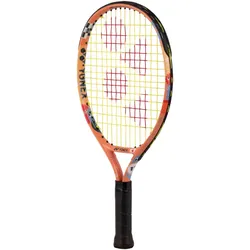
YONEX Kinder Tennis Schläger 25 YONEX JR 21, Tennis racket, Größe 0000 in OrangeDer YONEX 25 JR 21 ist ein bespannter Tennisschläger für Kinder. Du bekommst ihn direkt mit Bespannung. Der Kopf ist oval geformt, die Saiten sind gelb mit roten Akzenten. Zur Wahl stehen die Farben Ocean Blue und Coral Orange.36,90 €*Versand: 3,95 €Sichere Weiterleitung zum Anbieter
-
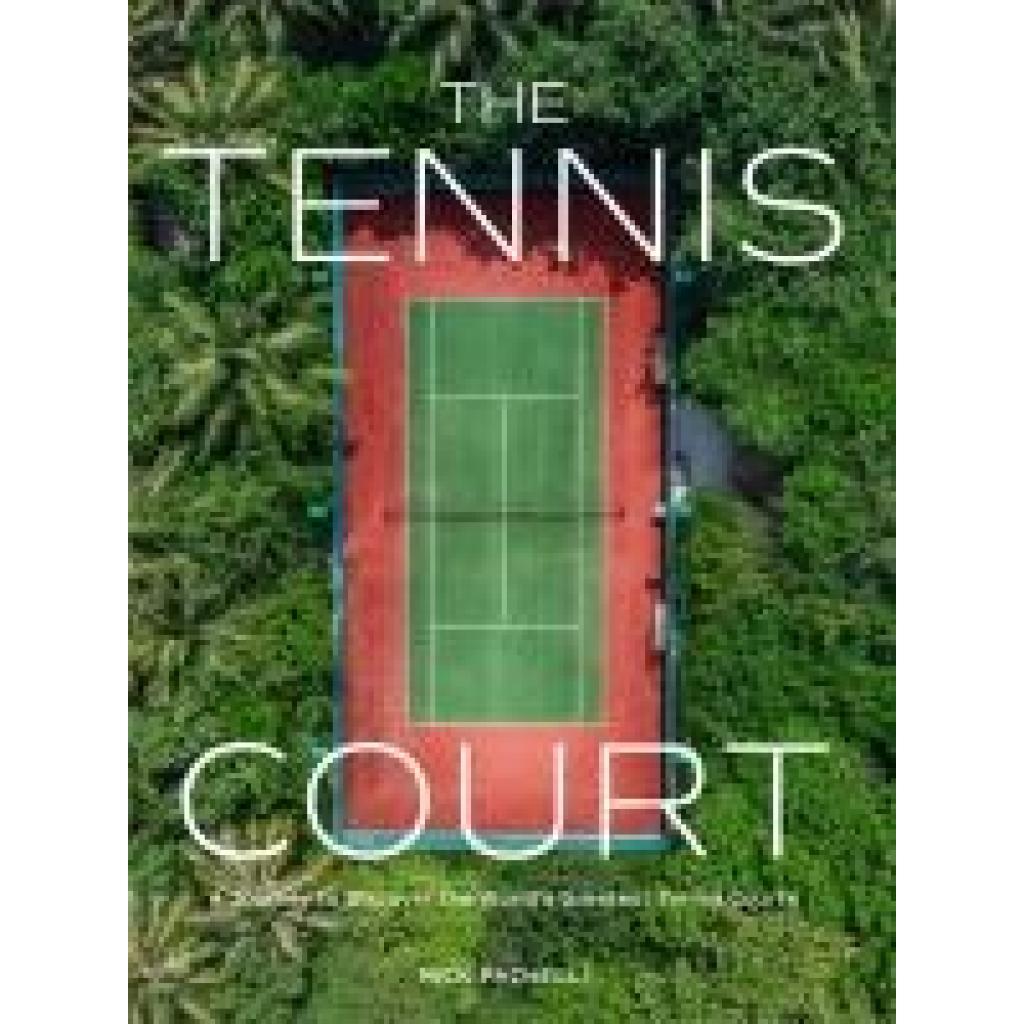
Pachelli, Nick: The Tennis CourtThe Tennis Court , Every one of the world's half a million tennis courts is, at its most basic, an identical blank canvas: a 78-foot by 36-foot rectangle, divided by a 3-foot-high net in its centre, and marked with eleven straight lines. But add in the elements of surface, space, wind, acoustics, crowds, shadows, humidity, and even air density, and every tennis court is unique-a work of art. And some are masterpieces. Nick Pachelli curates and profiles 200 of the world's most beautiful, iconic, significant, alluring, and idiosyncratic tennis courts from across the globe, each breathtakingly photographed. He explores the heavyweights, including Wimbledon's All England Lawn Tennis Club, which employs a hawk to keep stray birds from soiling the meticulous lawns. Arthur Ashe, the Grandstand, and Court 17 in Flushing, Queens, where hundreds of thousands of tennis fans gather every summer for the US Open. And there's Court Philippe-Chatrier at Roland-Garros, whose clay seems to take on a different shade-burnt orange, burnt red, burgundy, umber-every time you see it. We visit far-flung treasures, such as Waiheke Tennis Club in New Zealand, where you'll need to take a plane, then a ferry, then a car or bus, and then walk before arriving there. Indoor marvels, including the Tennis Club de Belgique, which evokes the hushed, reverent feeling of a theatre, with skylights illuminating the court and leaving the spectators in the shadows. Hidden jewels, such as the tiny Tennis Club San Stin in Venice, a secret, single outdoor clay court tucked away behind a villa and a 15-foot wall shrouded with vines. There are urban courts, including the Knickerbocker Field Club, deep in the heart of Flatbush, Brooklyn. Academies, like Rafael Nadal's tennis temple in Mallorca, Spain. And the extreme: a single court completely isolated in the wilds of Scotland; a court in northern Spain revealed when the tide goes out, the sand hardens, and the metallic plates that serve as lines re-emerge; and a court in Kenya made out of termite mounds. Throughout, Pachelli not only conducts a masterful, once-in-a-lifetime tour of the world's best courts, but in his writing does something equally immersive: He captures the real passion-some might say obsession-that tennis inspires. Because it's on the court, no matter how grandiose or mundane, whether in an exotic locale or around the corner, where tennis players truly see themselves. Where we come face-to-face with our temperament, our drive, our frustration, our bliss, our longing. "This book made me fall in love with tennis all over again." - Rennae Stubbs, former world No. 1 and six-time Grand Slam champion "How had I been so blind? I'd seen a tennis court as an arrangement of lines, neat boxes, a net. This book reveals so much more: spaces within spaces, quirks and surfaces, shadows and light, and the communities most of all. What a gift. I won't look at the game the same way again." - Louisa Thomas, staff writer, The New Yorker "A pure pleasure to read and peruse." - Christopher Clarey, New York Times bestselling author "From Kent to Kenya, Marrakech to Melbourne. Indoors, outdoors. Seaside and underground. Pachelli captures the magic in this masterful book, which celebrates not just tennis, but this topspinning orb we call planet Earth." - Jon Wertheim, New York Times bestselling author and correspondent for 60 Minutes "I've been around tennis all over the world, and this book truly speaks to the beauty and importance of tennis courts, whether at tennis academies or remote public courts. Every tennis player and fan will enjoy this book." - Patrick Mouratoglou, world-renowned tennis coach and founder of Mouratoglou Academy "This book contains hundreds of beautifully photographed tennis courts. The real joy, though, is found in the stories that unfold about each one." - Katrina M. Adams, author and former president of the USTA "Detailing the remote and far-removed to the legendary courts that have hosted the most storied events in tennis history, this gorgeous book lends us a lens to encounter the world." - Caitlin Thompson, founder of Racquet magazine "Can't travel right now? No worries; Nick Pachelli has got you covered. My recommendation: Open the book to a random page and start dreaming away. And who knows? One day you may find yourself exactly there. A truly dreamy book!" - Andrea Petkovic, former top-10 professional tennis player, host, and writer "A stunning celebration of tennis that speaks to the heart of anyone with a passion for a pastime."- Tom Coyne, New York Times bestselling author , > , Erscheinungsjahr: 20240827, Produktform: Leinen, Autoren: Pachelli, Nick, Seitenzahl/Blattzahl: 335, Themenüberschrift: SPORTS & RECREATION / Racket Sports / Tennis, Keyword: tennis court book;us open;gifts for men;coffee table book;tennis photography;french open;grand slams;tennis fashion;tennis style;travel photography;tennis europe, Fachschema: Englische Bücher / Sachbuch / Sport~Fotobände (allgemein)~Geschenkband / Fotobände~Fotografie / Dokumentarfotografie, Geschichte~Tennis~Sport / Lexikon, Handbuch, Jahrbuch, Fachkategorie: Fotografie: Sammlungen~Fotojournalismus~Sport, allgemein~Reiseführer: Aktiv-Urlaub, Imprint-Titels: Artisan, Warengruppe: HC/Ballsport, Fachkategorie: Tennis, UNSPSC: 49019900, Warenverzeichnis für die Außenhandelsstatistik: 49019900, Verlag: Workman Publishing, Verlag: Workman Publishing, verfügbar ab: 20240912, Länge: 290, Breite: 211, Höhe: 30, Gewicht: 1485, Produktform: Gebunden, Genre: Importe, Genre: Importe,31,12 €*Versand: 0,00 €Sichere Weiterleitung zum Anbieter


-
Welche Präposition gibt es?
Welche Präposition gibt es? Präpositionen sind Wörter, die eine Beziehung zwischen Substantiven oder Pronomen und anderen Wörtern im Satz ausdrücken. Sie geben Informationen über Zeit, Ort, Richtung oder Beziehung an. Einige Beispiele für Präpositionen sind "in", "auf", "an", "unter", "neben" und "vor". Präpositionen sind wichtige Bestandteile der deutschen Grammatik und helfen dabei, die Beziehungen zwischen verschiedenen Elementen im Satz klarer zu machen. Es ist wichtig, die Verwendung von Präpositionen zu verstehen, um korrekte und sinnvolle Sätze zu bilden. **
-
Ist trotz eine Präposition?
Ja, "trotz" ist eine Präposition im Deutschen. Sie wird verwendet, um einen Gegensatz oder eine Einschränkung auszudrücken. Zum Beispiel: "Trotz des Regens gingen wir spazieren." In diesem Satz zeigt "trotz" an, dass der Regen keine Hindernis für den Spaziergang war. "Trotz" wird immer mit dem Genitiv verwendet, was bedeutet, dass das Substantiv, das darauf folgt, im Genitiv stehen muss. "Trotz" kann auch mit einem Pronomen verwendet werden, z.B. "Trotz allem" oder "Trotz mir". **
-
Ist "am" eine Präposition?
Ja, "am" ist eine Präposition im Deutschen. Sie wird verwendet, um eine zeitliche oder räumliche Beziehung auszudrücken, zum Beispiel "am Morgen" oder "am Bahnhof". **
-
Was ist eine Präposition?
Eine Präposition ist eine Wortart, die eine räumliche, zeitliche oder logische Beziehung zwischen verschiedenen Elementen in einem Satz ausdrückt. Sie steht in der Regel vor einem Nomen oder Pronomen und zeigt an, wie dieses mit anderen Wörtern oder Satzteilen verbunden ist. Beispiele für Präpositionen sind "in", "auf", "vor", "nach" oder "über". **


Was ist eine Präposition Französisch?
Eine Präposition im Französischen ist ein Wort, das normalerweise vor einem Substantiv oder Pronomen steht und die Beziehung zwischen diesem Wort und anderen Wörtern im Satz angibt. Präpositionen können Orts-, Zeit- oder Richtungsangaben machen. Beispiele für Präpositionen im Französischen sind "à" (zu), "de" (von), "sur" (auf) und "dans" (in). Sie sind unverzichtbar, um die Bedeutung eines Satzes klar und präzise zu vermitteln. **
Wann benutzt man Präposition an?
Die Präposition "an" wird verwendet, um eine räumliche Beziehung auszudrücken, beispielsweise um die Position oder Richtung eines Objekts oder einer Person zu beschreiben. Man benutzt "an", wenn etwas direkt an einer Oberfläche oder an einem Gegenstand liegt oder befestigt ist. Zum Beispiel: Das Bild hängt an der Wand. Außerdem wird "an" verwendet, um Kontakt oder Berührung auszudrücken, wie in dem Satz: Sie lehnte sich an die Tür. In einigen Fällen wird "an" auch verwendet, um eine zeitliche Beziehung anzugeben, wie in: Wir treffen uns an diesem Wochenende. **
Top-Angebote
Produkte zum Begriff Präposition:
-
YONEX Kinder Tennis Schläger 25 YONEX JR 21, Tennis racket, Größe 0000 in OrangeDer YONEX 25 JR 21 ist ein bespannter Tennisschläger für Kinder. Du bekommst ihn direkt mit Bespannung. Der Kopf ist oval geformt, die Saiten sind gelb mit roten Akzenten. Zur Wahl stehen die Farben Ocean Blue und Coral Orange.36,90 €*Versand: 3,95 €Sichere Weiterleitung zum Anbieter
-
Welche Präposition?
Die Wahl der Präposition hängt von verschiedenen Faktoren ab, wie zum Beispiel dem Kontext, der Bedeutung des Verbs oder dem Kasus des Substantivs. Es gibt keine allgemeingültige Regel, welche Präposition in welchem Fall verwendet werden muss, sondern es muss immer individuell entschieden werden. Es ist daher wichtig, die verschiedenen Präpositionen und ihre Bedeutungen zu kennen und anhand von Beispielen zu üben. **
-
Adverb oder Präposition?
Ob ein Wort ein Adverb oder eine Präposition ist, hängt von seiner Funktion im Satz ab. Ein Adverb beschreibt ein Verb, Adjektiv oder ein anderes Adverb genauer, während eine Präposition eine Verbindung zwischen einem Substantiv und einem anderen Wort herstellt. Um zu bestimmen, ob ein Wort ein Adverb oder eine Präposition ist, muss man den Kontext betrachten und die Funktion des Wortes im Satz analysieren. **
-
Welche Präposition gibt es?
Welche Präposition gibt es? Präpositionen sind Wörter, die eine Beziehung zwischen Substantiven oder Pronomen und anderen Wörtern im Satz ausdrücken. Sie geben Informationen über Zeit, Ort, Richtung oder Beziehung an. Einige Beispiele für Präpositionen sind "in", "auf", "an", "unter", "neben" und "vor". Präpositionen sind wichtige Bestandteile der deutschen Grammatik und helfen dabei, die Beziehungen zwischen verschiedenen Elementen im Satz klarer zu machen. Es ist wichtig, die Verwendung von Präpositionen zu verstehen, um korrekte und sinnvolle Sätze zu bilden. **
-
Ist trotz eine Präposition?
Ja, "trotz" ist eine Präposition im Deutschen. Sie wird verwendet, um einen Gegensatz oder eine Einschränkung auszudrücken. Zum Beispiel: "Trotz des Regens gingen wir spazieren." In diesem Satz zeigt "trotz" an, dass der Regen keine Hindernis für den Spaziergang war. "Trotz" wird immer mit dem Genitiv verwendet, was bedeutet, dass das Substantiv, das darauf folgt, im Genitiv stehen muss. "Trotz" kann auch mit einem Pronomen verwendet werden, z.B. "Trotz allem" oder "Trotz mir". **
Ähnliche Suchbegriffe für Präposition
-
Pachelli, Nick: The Tennis CourtThe Tennis Court , Every one of the world's half a million tennis courts is, at its most basic, an identical blank canvas: a 78-foot by 36-foot rectangle, divided by a 3-foot-high net in its centre, and marked with eleven straight lines. But add in the elements of surface, space, wind, acoustics, crowds, shadows, humidity, and even air density, and every tennis court is unique-a work of art. And some are masterpieces. Nick Pachelli curates and profiles 200 of the world's most beautiful, iconic, significant, alluring, and idiosyncratic tennis courts from across the globe, each breathtakingly photographed. He explores the heavyweights, including Wimbledon's All England Lawn Tennis Club, which employs a hawk to keep stray birds from soiling the meticulous lawns. Arthur Ashe, the Grandstand, and Court 17 in Flushing, Queens, where hundreds of thousands of tennis fans gather every summer for the US Open. And there's Court Philippe-Chatrier at Roland-Garros, whose clay seems to take on a different shade-burnt orange, burnt red, burgundy, umber-every time you see it. We visit far-flung treasures, such as Waiheke Tennis Club in New Zealand, where you'll need to take a plane, then a ferry, then a car or bus, and then walk before arriving there. Indoor marvels, including the Tennis Club de Belgique, which evokes the hushed, reverent feeling of a theatre, with skylights illuminating the court and leaving the spectators in the shadows. Hidden jewels, such as the tiny Tennis Club San Stin in Venice, a secret, single outdoor clay court tucked away behind a villa and a 15-foot wall shrouded with vines. There are urban courts, including the Knickerbocker Field Club, deep in the heart of Flatbush, Brooklyn. Academies, like Rafael Nadal's tennis temple in Mallorca, Spain. And the extreme: a single court completely isolated in the wilds of Scotland; a court in northern Spain revealed when the tide goes out, the sand hardens, and the metallic plates that serve as lines re-emerge; and a court in Kenya made out of termite mounds. Throughout, Pachelli not only conducts a masterful, once-in-a-lifetime tour of the world's best courts, but in his writing does something equally immersive: He captures the real passion-some might say obsession-that tennis inspires. Because it's on the court, no matter how grandiose or mundane, whether in an exotic locale or around the corner, where tennis players truly see themselves. Where we come face-to-face with our temperament, our drive, our frustration, our bliss, our longing. "This book made me fall in love with tennis all over again." - Rennae Stubbs, former world No. 1 and six-time Grand Slam champion "How had I been so blind? I'd seen a tennis court as an arrangement of lines, neat boxes, a net. This book reveals so much more: spaces within spaces, quirks and surfaces, shadows and light, and the communities most of all. What a gift. I won't look at the game the same way again." - Louisa Thomas, staff writer, The New Yorker "A pure pleasure to read and peruse." - Christopher Clarey, New York Times bestselling author "From Kent to Kenya, Marrakech to Melbourne. Indoors, outdoors. Seaside and underground. Pachelli captures the magic in this masterful book, which celebrates not just tennis, but this topspinning orb we call planet Earth." - Jon Wertheim, New York Times bestselling author and correspondent for 60 Minutes "I've been around tennis all over the world, and this book truly speaks to the beauty and importance of tennis courts, whether at tennis academies or remote public courts. Every tennis player and fan will enjoy this book." - Patrick Mouratoglou, world-renowned tennis coach and founder of Mouratoglou Academy "This book contains hundreds of beautifully photographed tennis courts. The real joy, though, is found in the stories that unfold about each one." - Katrina M. Adams, author and former president of the USTA "Detailing the remote and far-removed to the legendary courts that have hosted the most storied events in tennis history, this gorgeous book lends us a lens to encounter the world." - Caitlin Thompson, founder of Racquet magazine "Can't travel right now? No worries; Nick Pachelli has got you covered. My recommendation: Open the book to a random page and start dreaming away. And who knows? One day you may find yourself exactly there. A truly dreamy book!" - Andrea Petkovic, former top-10 professional tennis player, host, and writer "A stunning celebration of tennis that speaks to the heart of anyone with a passion for a pastime."- Tom Coyne, New York Times bestselling author , > , Erscheinungsjahr: 20240827, Produktform: Leinen, Autoren: Pachelli, Nick, Seitenzahl/Blattzahl: 335, Themenüberschrift: SPORTS & RECREATION / Racket Sports / Tennis, Keyword: tennis court book;us open;gifts for men;coffee table book;tennis photography;french open;grand slams;tennis fashion;tennis style;travel photography;tennis europe, Fachschema: Englische Bücher / Sachbuch / Sport~Fotobände (allgemein)~Geschenkband / Fotobände~Fotografie / Dokumentarfotografie, Geschichte~Tennis~Sport / Lexikon, Handbuch, Jahrbuch, Fachkategorie: Fotografie: Sammlungen~Fotojournalismus~Sport, allgemein~Reiseführer: Aktiv-Urlaub, Imprint-Titels: Artisan, Warengruppe: HC/Ballsport, Fachkategorie: Tennis, UNSPSC: 49019900, Warenverzeichnis für die Außenhandelsstatistik: 49019900, Verlag: Workman Publishing, Verlag: Workman Publishing, verfügbar ab: 20240912, Länge: 290, Breite: 211, Höhe: 30, Gewicht: 1485, Produktform: Gebunden, Genre: Importe, Genre: Importe,31,12 €*Versand: 0,00 €Sichere Weiterleitung zum Anbieter
-
Roth, Christina: Ballschule TennisBallschule Tennis , Das ABC für Tenniskinder , Zündkabel & Zündspulenstecker > Zünd- & Glühanlagen , Erscheinungsjahr: 20220628, Produktform: Kartoniert, Beilage: Spiralbindung, Titel der Reihe: Reihe Ballschule#7#, Autoren: Roth, Christina~Ebert, Michael~Roth, Klaus, Seitenzahl/Blattzahl: 176, Keyword: Angriff; Aufschlag; Ballschule; Grundlinie; Heidelberg; Koordination; Motorik; Netzspiel; Spieleroeffnung; Spieleröffnung, Fachschema: Tennis, Thema: Verstehen, Warengruppe: TB/Ballsport, Fachkategorie: Tennis, Thema: Optimieren, Text Sprache: ger, UNSPSC: 49019900, Warenverzeichnis für die Außenhandelsstatistik: 49019900, Verlag: Hofmann GmbH & Co. KG, Verlag: Hofmann GmbH & Co. KG, Verlag: Hofmann-Verlag GmbH & Co. KG, Länge: 238, Breite: 157, Höhe: 17, Gewicht: 441, Produktform: Kartoniert, Genre: Sachbuch/Ratgeber, Genre: Sachbuch/Ratgeber, Herkunftsland: DEUTSCHLAND (DE), Katalog: deutschsprachige Titel, Katalog: Gesamtkatalog, Katalog: Kennzeichnung von Titeln mit einer Relevanz > 30, Katalog: Lagerartikel, Book on Demand, ausgew. Medienartikel, Relevanz: 0035, Tendenz: -1, Unterkatalog: AK, Unterkatalog: Bücher, Unterkatalog: Lagerartikel, Unterkatalog: Taschenbuch,24,90 €*Versand: 0,00 €Sichere Weiterleitung zum Anbieter
-
Ist "am" eine Präposition?
Ja, "am" ist eine Präposition im Deutschen. Sie wird verwendet, um eine zeitliche oder räumliche Beziehung auszudrücken, zum Beispiel "am Morgen" oder "am Bahnhof". **
-
Was ist eine Präposition?
Eine Präposition ist eine Wortart, die eine räumliche, zeitliche oder logische Beziehung zwischen verschiedenen Elementen in einem Satz ausdrückt. Sie steht in der Regel vor einem Nomen oder Pronomen und zeigt an, wie dieses mit anderen Wörtern oder Satzteilen verbunden ist. Beispiele für Präpositionen sind "in", "auf", "vor", "nach" oder "über". **
-
Was ist eine Präposition Französisch?
Eine Präposition im Französischen ist ein Wort, das normalerweise vor einem Substantiv oder Pronomen steht und die Beziehung zwischen diesem Wort und anderen Wörtern im Satz angibt. Präpositionen können Orts-, Zeit- oder Richtungsangaben machen. Beispiele für Präpositionen im Französischen sind "à" (zu), "de" (von), "sur" (auf) und "dans" (in). Sie sind unverzichtbar, um die Bedeutung eines Satzes klar und präzise zu vermitteln. **
-
Wann benutzt man Präposition an?
Die Präposition "an" wird verwendet, um eine räumliche Beziehung auszudrücken, beispielsweise um die Position oder Richtung eines Objekts oder einer Person zu beschreiben. Man benutzt "an", wenn etwas direkt an einer Oberfläche oder an einem Gegenstand liegt oder befestigt ist. Zum Beispiel: Das Bild hängt an der Wand. Außerdem wird "an" verwendet, um Kontakt oder Berührung auszudrücken, wie in dem Satz: Sie lehnte sich an die Tür. In einigen Fällen wird "an" auch verwendet, um eine zeitliche Beziehung anzugeben, wie in: Wir treffen uns an diesem Wochenende. **
* Alle Preise verstehen sich inklusive der gesetzlichen Mehrwertsteuer und ggf. zuzüglich Versandkosten. Die Angebotsinformationen basieren auf den Angaben des jeweiligen Shops und werden über automatisierte Prozesse aktualisiert. Eine Aktualisierung in Echtzeit findet nicht statt, so dass es im Einzelfall zu Abweichungen kommen kann. ** Hinweis: Teile dieses Inhalts wurden von KI erstellt.